Air rifles
The air rifles that Jem and Scout receive as Christmas presents are far more than toys; they become instruments through which Atticus Finch teaches his children profound lessons about responsibility, restraint, and the moral use of power. The guns first appear as the longed-for contents of two long packages that Uncle Jack Finch brings from Atticus, who had written to ask him to procure them. Jem and Scout dive for them on Christmas morning, and Atticus immediately establishes a rule: "Don't point them in the house," he says when Jem aims at a picture on the wall. He delegates the task of teaching the children to shoot to Uncle Jack, remarking, "I merely bowed to the inevitable." Atticus declines to let them take the air rifles to Finch's Landing, and warns that if they make one false move he will take the guns away for good. Scout has already begun to think of shooting her cousin Francis, a darkly comic foreshadowing of the violence the weapons make possible.
Acquisition and Initial Rules
The air rifles enter the Finch household as Christmas gifts from Atticus, procured through Uncle Jack. Jem and Scout receive them eagerly, but Atticus immediately imposes restrictions: no pointing the guns in the house, no taking them to Finch's Landing, and a threat to confiscate them for any misbehavior. Uncle Jack is tasked with teaching the children to shoot, a duty Atticus declines for himself. The guns thus arrive not as unregulated playthings but as objects that come with clear boundaries, setting the stage for the moral education that will follow.
The Mockingbird Lesson
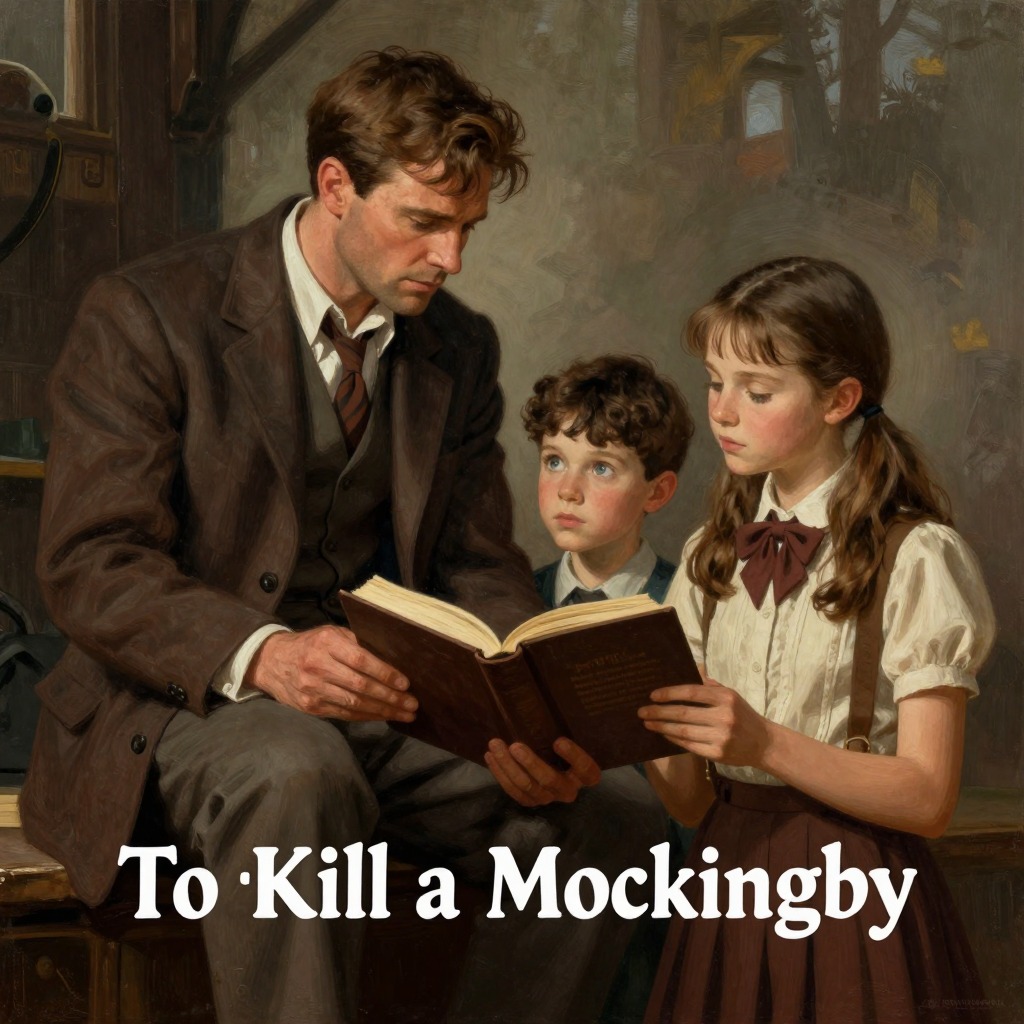
The most significant moment involving the air rifles occurs when Atticus tells Jem, "I'd rather you shot at tin cans in the back yard, but I know you'll go after birds. Shoot all the bluejays you want, if you can hit 'em, but remember it's a sin to kill a mockingbird." This is the only time Scout ever hears Atticus say it is a sin to do something, and she later asks Miss Maudie about it. Miss Maudie explains that mockingbirds do nothing but make music for people to enjoy; they do not eat gardens or nest in corncribs, but simply "sing their hearts out for us." The air rifles thus become the concrete context for the novel's central moral metaphor: the idea that innocence and goodness must be protected, and that the power to harm—even with a child's weapon—carries an ethical weight. The lesson is not about the guns themselves but about the restraint required in their use.
Exploration and the Mad Dog
One Saturday, Jem and Scout decide to go exploring with their air rifles, hoping to find a rabbit or a squirrel. They have gone about five hundred yards beyond the Radley Place when Jem notices something wrong with an old dog down the street. This dog, Tim Johnson, is later revealed to be rabid, and the incident leads to Atticus being called upon to shoot the animal with a rifle—not an air rifle, but a real one. The contrast is instructive: the children's air rifles are for harmless targets and small game, while the adult world requires a different kind of weapon and a different kind of responsibility. Jem's observation of Atticus's marksmanship transforms his understanding of his father, but the air rifles themselves remain in the background as symbols of childhood innocence and the limited power that children wield.
Narrative and Thematic Significance
The air rifles serve as a narrative device that allows Atticus to articulate his moral philosophy in a way that is accessible to children. They are also a marker of Jem and Scout's growing up: the guns are gifts that come with rules, and the children's ability to follow those rules—or fail to—reflects their moral development. The air rifles are never used for violence against people; Scout's fantasy of shooting Francis remains just that, a fantasy. Instead, they are associated with the natural world, with exploration, and with the lesson that power must be tempered by wisdom and compassion. In the end, the air rifles are not just objects but instruments of moral education, embodying the novel's central theme that true strength lies not in the ability to harm but in the restraint to refrain from doing so.